








































Customer advocacy software helps B2B organizations systematically mobilize satisfied customers as referral sources, reference providers, and brand champions—turning organic goodwill into measurable pipeline and revenue.
Your best customers love your product. They rave about it at conferences. They’d happily jump on a reference call tomorrow.
But nobody on your team ever asks them. The referrals sit on the table, uncollected. The case studies never get written.
Meanwhile, your competitor—the one with the slick reference program and an army of vocal advocates—keeps showing up in deals you thought you’d already won.
That’s the cost of leaving advocacy to chance.
Customer advocacy software changes the equation. It takes the goodwill your customers already feel and transforms it into a repeatable, scalable growth motion—without burning out your CS team or overwhelming your advocates.
In this guide, we’ll unpack exactly what customer advocacy software is, why it’s become essential for B2B growth teams, and how to evaluate the right platform for your organization. We’ll explore the core capabilities that separate great advocacy tools from mediocre ones, dig into real-world examples from companies that have built thriving programs, and share the data that makes the ROI case undeniable. We’ll also look ahead at how AI, gamification, and community-led growth are reshaping customer advocacy in 2026 and beyond. Let’s dive in.
What Is Customer Advocacy Software and Why Does It Matter?
Before we get tactical, let’s set the foundation. Customer advocacy software is a category of B2B platform designed to identify, engage, and mobilize your happiest customers as advocates for your brand. Think of it as the operating system for turning organic customer enthusiasm into structured, measurable business outcomes—referrals, references, reviews, testimonials, case studies, and social proof at scale.
This isn’t about asking for a favor once and hoping for the best. A modern customer advocacy platform—sometimes called an advocate marketing platform or customer marketing platform—creates a continuous engagement loop where advocates are recognized, rewarded, and energized to keep contributing.
The Problem It Solves
Most B2B companies have happy customers. Few have a system for harnessing that happiness. Sales teams scramble for references at the last minute. Marketing struggles to source authentic proof points. Customer success managers field ad-hoc requests that feel transactional to the customer and chaotic to the team.
The numbers paint a stark picture. According to Forrester, over 90% of B2B buyers trust peers in their industry—yet only 29% trust vendor salespeople. Meanwhile, research compiled by Referral Rock shows that 84% of B2B decision-makers start the buying process with a referral. Your customers are the most credible voice your company has—and customer advocacy software gives you the infrastructure to deploy that voice strategically.
Core Capabilities of Modern Advocacy Platforms
Not all customer advocacy tools are created equal, but the best platforms share a common set of capabilities:
- Advocate identification and segmentation. The platform surfaces your most engaged, satisfied customers using NPS data, product usage signals, and engagement scoring—so you’re asking the right people at the right time.
- Gamified engagement mechanics. Points, badges, tiered rewards, and challenges keep advocates active over the long haul. This is what separates a one-time ask from a sustained relationship. Gamified customer engagement is the engine behind programs that actually scale.
- Customer reference management. Organize, match, and protect your best references from burnout. The best tools automate reference matching to deal stage and industry, so your sales team gets the right proof point without overloading the same three customers.
- Referral tracking and pipeline attribution. Turn word-of-mouth into a measurable pipeline channel. Track who referred whom, at what stage, and what revenue resulted.
- Review and testimonial mobilization. Prompt advocates to leave reviews on G2, TrustRadius, and Capterra at the moments when they’re most likely to say yes.
- Analytics and ROI dashboards. Prove the revenue impact of advocacy with clear attribution—from advocate activity to influenced pipeline to closed-won revenue.
The unifying theme: customer advocacy software takes something that used to happen informally and by accident—word-of-mouth, peer recommendations, references—and makes it intentional, trackable, and scalable.
The technology amplifies what’s already real. Advocacy works because it’s genuine—software just makes sure that genuineness doesn’t go to waste.
The Business Case for Customer Advocacy Software
Understanding the “what” is important. But let’s be honest—your CFO doesn’t care about definitions. They care about results. So let’s talk about the business case.
Advocacy Drives Revenue You Can Measure
Customer advocacy is not a soft metric. When structured properly, it directly influences pipeline, deal velocity, and win rates.
Consider the data: Forrester research found that customer-obsessed B2B companies grow revenue 28% faster and achieve 33% higher profitability growth than their peers. Meanwhile, Champion’s ROI framework reports that 85% of sales and marketing professionals say having the right customer speak to a prospect helps deals close faster or at a higher rate.
And referrals aren’t just a nice-to-have side channel. Research from Referral Rock shows that referred leads convert at four times the rate of non-referred leads. When your customers vouch for you, the trust transfer is immediate and powerful.
The Trust Gap Is Widening
Trust in traditional marketing channels is eroding. According to a 2026 analysis by Thunderbit, only 9% of B2B buyers trust vendor websites as a top information source. They’re turning to peers, independent reviews, and professional communities instead.
The Wynter B2B Buyer Journey Study found that 73% of buyers rank word-of-mouth as their most trusted source of information. And Forrester’s buyer trust research confirms that over 85% of buyers trust the existing customers of vendors in their industry.
In a world where buyers have already formed opinions before they ever talk to your sales team, your advocates are doing the selling for you—whether you’ve empowered them to or not.
Retention and Expansion: The Hidden ROI
Advocacy doesn’t just acquire new customers—it retains existing ones. Forrester data shows that existing customers account for 61% of B2B revenue through renewal and expansion. Customers who participate in advocacy programs tend to be more engaged, more loyal, and more likely to expand their usage.
Influitive’s own customer base illustrates this: organizations running structured advocacy programs consistently report higher net retention rates, because the act of advocating deepens the customer’s connection to the brand. When someone publicly endorses your product, they’re reinforcing their own commitment to it. It’s a virtuous cycle.
The business case is clear. But building an advocacy program that actually scales? That’s where most teams stall. Let’s break down how to get it right.
Building a Customer Advocacy Program That Actually Scales
Knowing advocacy matters is one thing. Operationalizing it is another. Here’s the playbook for building a program that doesn’t stall after the first quarter.
Start With Your Champion Map
You can’t build an advocacy program if you don’t know who your advocates are. Start by mapping your customer base against engagement signals: NPS scores, product usage depth, support ticket sentiment, event attendance, and social mentions. Champion’s research suggests that up to 15% of your user base could qualify as champions or advocates, depending on your NPS distribution.
The key is not to guess. Use data to identify customers who are genuinely enthusiastic—not just satisfied—and segment them by willingness to participate in different advocacy activities. Some want to do case studies. Others prefer quick G2 reviews. A few will happily speak at your annual conference. Meet them where they are.
Design for the Advocate Experience, Not Just Your Needs
This is where most programs break down. Companies design advocacy programs around their needs—“we need ten references this quarter”—without asking what the advocate gets out of it.
The best programs create genuine value for the advocate: exclusive access to product roadmaps, peer networking with other senior leaders, professional development opportunities, public recognition, and yes—gamified rewards that make participation fun. Referential’s 2025 trends analysis found that 71% of consumers expect personalized interactions, and 76% get frustrated when that doesn’t happen. Advocacy programs are no exception.
Companies like Cisco and Adobe have built world-class advocacy programs by treating advocates as strategic partners, not promotional assets. Cisco, for example, recognized early that customers who adopt products within the first 30 days are far more likely to become long-term advocates—so they invested heavily in onboarding as the first step of their advocacy funnel.
Embed Advocacy Into the Customer Lifecycle
Advocacy shouldn’t be an afterthought bolted on after renewal. ChurnZero’s Lifecycle Advocacy framework makes a compelling case for embedding advocacy asks at natural inflection points across the customer journey: onboarding milestones, first value achieved, expansion moments, and renewals.
The takeaway is simple: when advocacy is woven into the customer lifecycle rather than treated as a series of one-off requests, it feels natural to the customer and sustainable for your team. Map your journey stages—land, adopt, expand, renew—and identify the advocacy asks that fit each stage.
Measure What Matters
You can’t improve what you don’t measure. Track these metrics from day one:
- Advocate activation rate: What percentage of identified champions actually participate in at least one advocacy activity?
- Reference utilization and burnout: How often are your top references being tapped, and are you rotating effectively?
- Referral pipeline attribution: How much influenced pipeline and closed-won revenue can you trace back to advocate referrals?
- Review velocity: How many third-party reviews are advocates generating per quarter?
- Advocate engagement over time: Are advocates staying active, or is your program experiencing churn?
These metrics connect advocacy activities to business outcomes—and give you the ammunition to defend and grow your program budget.
Of course, measuring advocacy is one thing. Choosing the right technology to power it is another. Let’s look at what separates the best customer advocacy tools from the rest of the pack.
How to Evaluate Customer Advocacy Software: What to Look For
The customer advocacy software market has matured significantly. Forrester’s Tech Tide report on B2B Customer Advocacy and Reference Technologies analyzed ten technology categories supporting this space, confirming that higher-performing programs consistently lean on technology to scale advocate sourcing, management, activation, and measurement. Here’s what to evaluate.
Gamification That Goes Beyond Points
Every advocacy platform claims gamification. The question is whether it’s superficial (a leaderboard and a gift card) or structural (tiered engagement paths, personalized challenges, and intrinsic motivators like exclusive access and peer recognition). The best gamified customer engagement is designed around behavioral psychology—not just transaction mechanics.
Look for platforms that let you design challenge pathways tailored to advocate personas: a VP of IT shouldn’t get the same challenges as a marketing manager. Personalization at this level is what drives sustained engagement rather than a spike-and-fade pattern.
Reference Management and Reference Deflection
Customer reference management is one of the most undervalued capabilities in the advocacy stack. Your sales team needs references to close deals, but your best customers can’t take three calls a week. The right software automates reference matching based on industry, company size, use case, and deal stage—and tracks reference utilization to prevent burnout.
An emerging concept called reference deflection takes this further: instead of connecting a prospect with a live reference every time, the platform surfaces pre-recorded video testimonials, written case studies, or curated review snippets that address the prospect’s specific concern. This satisfies the buyer’s need for peer validation without tapping a reference at all.
Integration Depth
Advocacy data is only valuable if it flows into your existing systems. Evaluate how deeply the platform integrates with your CRM (Salesforce, HubSpot), marketing automation (Marketo, Pardot), and communication tools (Slack, Microsoft Teams). The best tools push advocate activity data directly into contact records and opportunity timelines, so sales can see which advocates have influenced which deals.
AI-Powered Intelligence
In 2026, AI is rapidly becoming table stakes in the advocacy space. Look for platforms with AI capabilities that can predict which customers are most likely to advocate, recommend the optimal timing for advocacy asks, auto-generate personalized outreach, and surface the right proof assets for the right deal at the right moment.
This is where the category is heading—and organizations that adopt AI-augmented advocacy early will have a compounding advantage.
Now that we know what to look for, let’s explore how leading companies are putting these capabilities into action.
Real-World Examples: Customer Advocacy Software in Action
Theory is useful. Proof is better. Here’s how real B2B companies have used customer advocacy software to generate measurable business impact.
Cisco: Onboarding as the Advocacy Launchpad
Cisco recognized that customers who adopt products within the first 30 days are significantly more likely to renew—and to become advocates. By investing in a structured onboarding experience and tying early product adoption to advocacy readiness signals, Cisco built a pipeline of willing advocates before most competitors even send their first NPS survey. PathFactory’s analysis of the Cisco approach documented a 3.5x lift in customer adoption rates as a result of their always-on educational content strategy.
DocuSign: Scaling References Without Burnout
DocuSign faced a classic scaling problem: their sales team needed more references, but their most vocal advocates were being tapped too frequently. By implementing customer advocacy software with robust reference management and automated matching, DocuSign was able to distribute reference requests across a broader pool of advocates—reducing burnout while increasing reference availability. The result was faster deal cycles and happier advocates.
ADP: Community-Driven Advocacy
ADP built a customer community powered by advocacy software that turned engaged community members into active advocates. By combining community marketing platform functionality with gamified challenges and referral tracking, ADP created a self-sustaining ecosystem where customers helped each other, contributed product feedback, and organically promoted ADP to their networks. The community became both a retention tool and a demand generation engine.
The Common Thread
In every case, the technology was the enabler—not the driver. These companies succeeded because they built authentic relationships with their customers first and then used customer advocacy software to scale those relationships without losing the personal touch.
That authenticity-plus-technology formula is worth holding onto as we look at where the advocacy category is heading next.
The Benefits of Customer Advocacy: Beyond Pipeline
We’ve covered the revenue case. But the benefits of customer advocacy extend well beyond pipeline attribution.
Accelerated Sales Cycles
When a prospect hears from a peer who’s already solved the problem they’re facing, objections dissolve faster. Martal Group’s 2025 research reports that 84% of B2B decision-makers base buying decisions on peer recommendations and social proof. Having that proof organized and accessible—rather than buried in someone’s inbox—shaves days or weeks off enterprise sales cycles.
Lower Customer Acquisition Costs
Referred leads are pre-qualified by trust. They convert at higher rates and require less nurturing. Referral Rock’s data indicates that referred leads are four times more likely to convert, and nurtured referral leads make 47% larger purchases than non-nurtured leads. When advocacy generates pipeline, your cost-per-opportunity drops meaningfully compared to paid channels.
Stronger Brand Authority
Every G2 review, every testimonial, every conference speaking slot filled by a customer advocate compounds your brand’s authority in the market. According to Sopro’s 2025 B2B buyer statistics, 75% of B2B marketers consider case studies and customer stories the most effective content type they produce. Advocacy software ensures you have a steady pipeline of these proof assets—not just the two case studies your marketing team scrambled to produce last year.
Deeper Customer Retention
Advocacy is a two-way street. Customers who participate in advocacy programs get exclusive access, community connections, and a stronger relationship with your brand. Forrester’s B2B research shows that customer-obsessed companies achieve 43% better retention rates. Active advocates are rarely the ones who churn.
The compounding nature of these benefits is what makes customer advocacy software such a powerful investment. But the category isn’t standing still. Let’s look at what’s coming next.
Looking Ahead: The Future of Customer Advocacy Software in 2026 and Beyond
The customer advocacy space is evolving fast. Here are the trends shaping where the category is headed.
AI-Powered Advocacy Intelligence
AI in customer advocacy is no longer speculative—it’s here. Platforms like Influitive are deploying AI capabilities (like Groovy AI) to predict advocacy readiness, personalize outreach at scale, auto-match references to deals, and generate advocate-sourced content faster than ever. As AI tools become embedded throughout the B2B buying process—Thunderbit reports that 94% of B2B buyers now use AI tools during their purchase journey—advocacy platforms that leverage AI will be better positioned to meet buyers where they already are.
Evidence-Led Marketing
The shift from brand-led to evidence-led marketing is accelerating. Buyers want data, proof, and peer validation—not polished messaging. Customer advocacy software is evolving to become the hub for automated customer proof: curated libraries of testimonials, case study snippets, review aggregations, and peer-verified ROI data that sales and marketing teams can deploy in real time.
Community-Led Growth as a GTM Motion
Customer community software and advocacy platforms are converging. The most forward-thinking B2B companies are building communities where customers help each other, co-create content, and organically drive demand—turning the community itself into a growth channel. Expect this convergence to accelerate as companies seek more efficient, trust-based acquisition channels.
Gamification Maturity
Early gamification in B2B was clunky—leaderboards and gift cards that felt patronizing to senior decision-makers. The next generation of gamified engagement is more sophisticated: personalized challenge paths, intrinsic rewards like exclusive access and peer recognition, and behavioral design principles that make participation genuinely enjoyable rather than transactional.
Reference Deflection at Scale
As B2B sales teams get more efficient, the demand for references is outpacing supply. Reference deflection—using curated, on-demand proof assets to satisfy buyer needs without requiring a live reference call—will become a standard capability rather than an edge case. This protects advocates, speeds up deal cycles, and scales the impact of every reference interaction.
The thread connecting all of these trends? Technology is getting smarter, but the foundation remains the same: authentic customer relationships, mobilized at scale.
Conclusion: The Advocacy Advantage Is Yours to Claim
We’ve covered a lot of ground—from what customer advocacy software actually does, to the data that proves its ROI, to the real-world playbooks of companies that have built thriving programs.
Here’s what it comes down to. Your happiest customers are already your most credible growth channel. They trust your product, they talk about it naturally, and they’d do more for you if you just made it easy. Customer advocacy software is the infrastructure that makes it easy—systematically, at scale, and without burning out the people who matter most.
But the technology is only half the equation. The programs that deliver transformative results are the ones that treat advocates as partners, not promotional assets. They invest in the advocate experience. They embed advocacy into the customer lifecycle rather than tacking it on as an afterthought. And they measure relentlessly—connecting every reference call, every review, every referral back to the business outcomes that justify continued investment.
The adoption of customer advocacy programs is accelerating—the Customer Marketing Alliance reported that the share of companies with formal advocacy programs grew from 39% to over 52% in a single year. The question is no longer whether your competitors are investing in advocacy. It’s whether you’re going to let them own the narrative while your best customers sit on the sidelines.
Build Your Advocacy Engine with Influitive
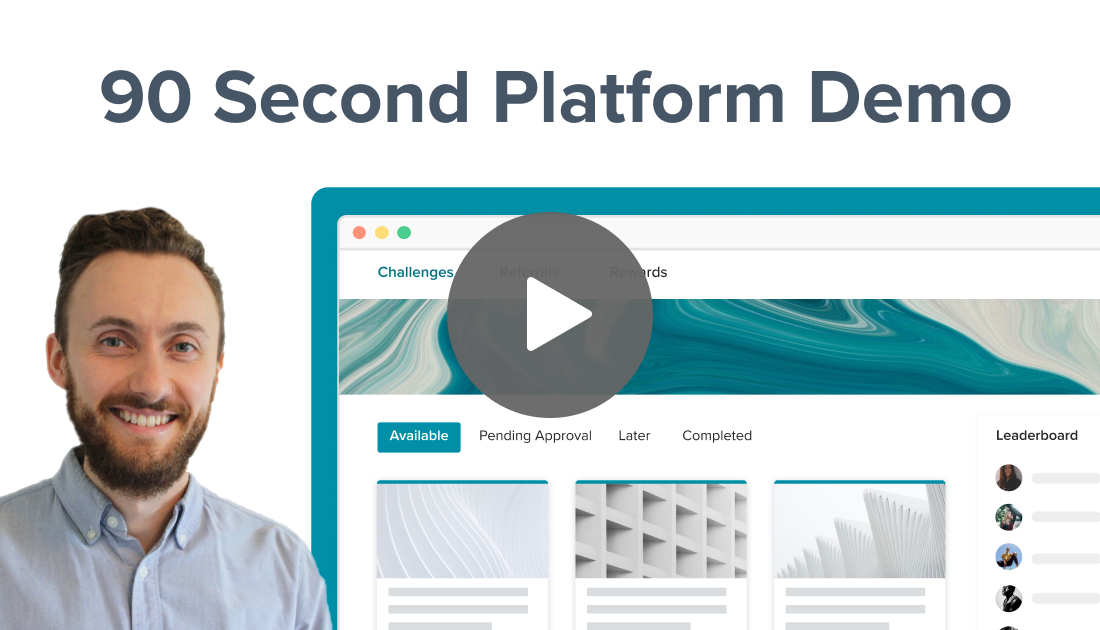
Influitive’s AdvocateHub is the leading customer advocacy software platform purpose-built for B2B companies that want to turn happy customers into a scalable growth engine. With gamified challenges that keep advocates engaged over the long haul, robust customer reference management that protects your best advocates from burnout, and AI-powered capabilities through Groovy AI that predict advocacy readiness and personalize outreach at scale, Influitive gives you the infrastructure to build a program that actually works.
From referral pipeline attribution and review mobilization to deep integrations with Salesforce, HubSpot, and Marketo, Influitive connects every advocate interaction to measurable business outcomes. And with analytics and ROI dashboards that prove the revenue impact of advocacy, you’ll never have to justify your program budget on gut feeling alone.
Ready to see what structured advocacy can do for your pipeline? Request a demo and discover how the world’s leading B2B companies are scaling advocacy with Influitive.